
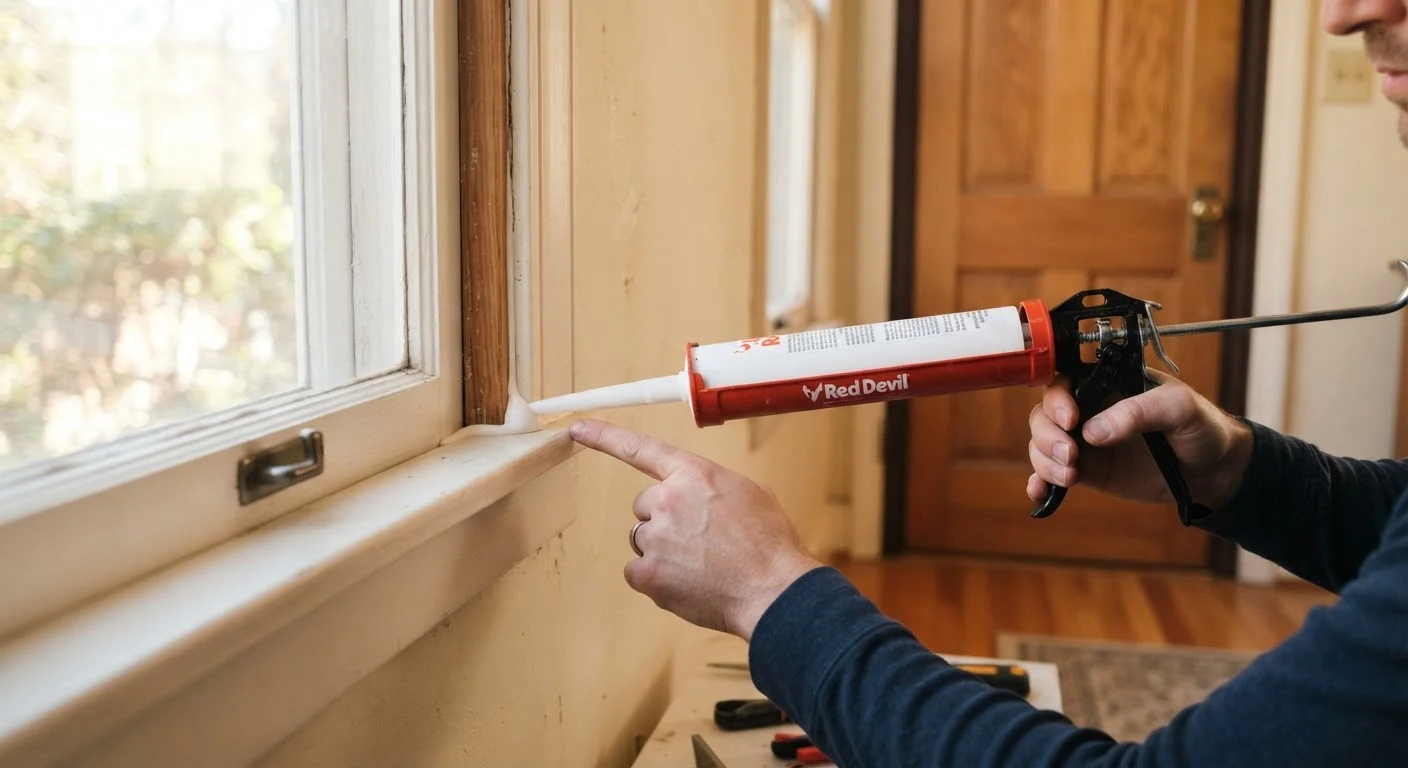
Small Gaps, Big Consequences
Most homeowners spend considerable energy thinking about roofs, HVAC systems, and water heaters - the expensive stuff. Caulk and weatherstripping rarely make the list, even though failing seals are among the most common contributors to high energy bills, moisture intrusion, and accelerating structural damage.
Air infiltration - the movement of outside air into a home through gaps and cracks - forces heating and cooling systems to work harder. According to the U.S. Department of Energy, sealing air leaks and improving insulation can meaningfully reduce energy costs, with gaps around windows, doors, and utility penetrations being primary culprits. These are exactly the areas that caulk and weatherstripping are designed to address.
Understanding what each material does - and where each belongs - is the foundation of using them effectively. For a deeper look at how these materials compare to grout and sealants, see our guide on choosing the right material for each job.
25-30%
Home heating/cooling energy lost to air leaks
The U.S. Department of Energy estimates that air infiltration through gaps, cracks, and openings accounts for roughly 25-30% of heating and cooling energy use in a typical home.
$200-$600
Estimated annual energy savings from sealing and insulating
The Environmental Protection Agency's ENERGY STAR program has cited figures in this range for households that address air sealing and insulation together, though results vary significantly by climate and home size.
Caulk vs. Weatherstripping: Know the Difference
Caulk is a flexible sealant applied to stationary joints and gaps - the kind that don't move when a door opens or a window slides. Common caulking locations include the perimeter of window frames where they meet exterior siding, around door frames, along baseboards in drafty rooms, around plumbing penetrations, and at the joint between a bathtub and wall tile.
Weatherstripping, by contrast, is designed for moving parts. It compresses and releases every time a door closes or a window is operated. It comes in several forms - foam tape, V-strip (tension seal), door sweeps, and reinforced rubber gaskets - each suited to different levels of friction, gap size, and durability requirements.
Using caulk where weatherstripping belongs (around a door stop, for instance) will crack and fail within weeks. Using weatherstripping where caulk belongs won't create a watertight seal. The distinction is simple but important.
When in Doubt, Do Both
On an exterior door, the frame perimeter typically needs caulk (where the frame meets the siding), while the door stop and threshold need weatherstripping. These aren't either-or applications - a fully sealed door uses both materials in their correct locations. If you're unsure which product suits a specific gap, our guide on caulk versus sealant materials walks through the distinctions in detail.
Best Practices for Caulking and Weatherstripping
Knowing where these materials go is only half the picture. How and when you apply them determines whether they actually perform.
Inspect all caulked joints annually, ideally in early fall before heating season begins.
Caulk breaks down due to UV exposure, moisture cycling, and temperature swings. Cracked or separated caulk allows water infiltration that can lead to rot, mold, and structural damage over time. Catching failures early prevents expensive repairs.
Remove old caulk completely before applying new material.
Applying fresh caulk over deteriorated caulk creates a poor bond and a lumpy, ineffective seal. The new layer will fail sooner than a properly prepared surface would allow.
Match caulk type to the specific application - not just the color.
Silicone caulk excels in wet areas like bathrooms and around exterior windows because it repels water and remains flexible. Paintable latex caulk suits interior trim joints. Using the wrong formulation leads to early failure or adhesion problems.
Test weatherstripping compression before replacing - it may only need adjustment.
Weatherstripping fails in two ways: it physically deteriorates (crumbling foam, torn rubber) or it loses contact due to door settling or hinge wear. The second problem sometimes requires only a hinge adjustment rather than new material.
Prioritize high-traffic doors and the most exposed windows when budgeting your time.
Front entry doors, garage access doors, and any window facing the prevailing wind direction experience the most air infiltration and wear. Starting there delivers the greatest immediate return on your effort.
Quick Actions You Can Take This Weekend
These tasks require no special tools, minimal time, and very little expense. They're among the highest-return maintenance activities a homeowner can perform - and they're straightforward enough for most adults to do without professional help.
For a full picture of recurring upkeep across your home, the home maintenance task tracker breaks down major systems by frequency and scope. And if you're thinking about the broader cost of skipping small jobs like these, our piece on deferred maintenance costs illustrates how quickly neglect compounds.