
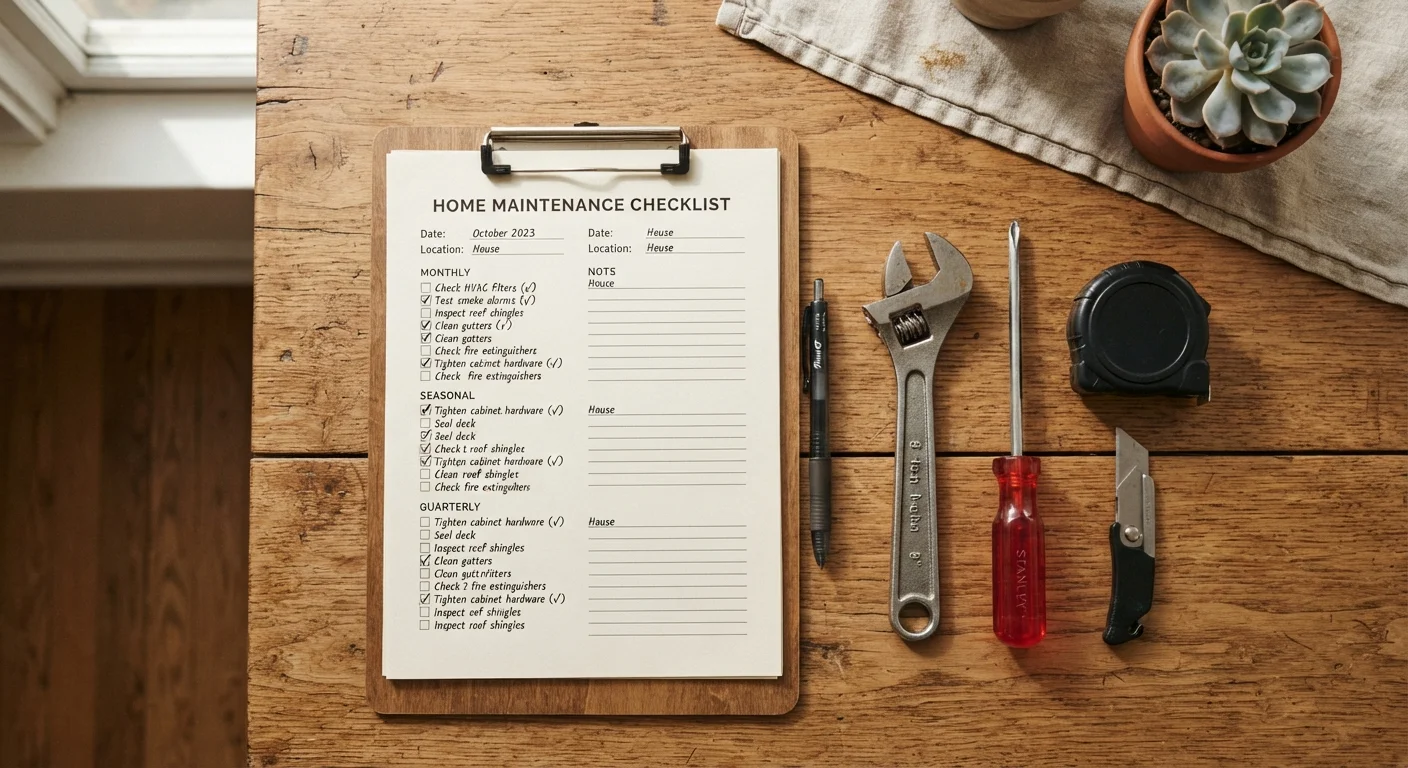
Why a Task Tracker Changes How You Maintain a Home
Most homeowners know maintenance matters. Far fewer have a reliable system for actually doing it. Without a structured reference, tasks get deferred - not out of negligence, but because no one told you what needed doing, how often, or what the consequence of skipping it would be.
A task tracker solves this by converting vague intentions into a concrete schedule. When you can see that your water heater should be flushed annually or that your dryer vent needs clearing every 12 months, the task stops feeling abstract and starts feeling manageable. Many new owners are caught off guard by repair costs precisely because no one handed them this kind of structure at closing.
This guide covers the major home systems and recurring tasks that every homeowner should track - organized by frequency, with a clear explanation of what each task actually involves.
1-4%
Of home value spent on maintenance annually
A commonly cited rule of thumb among housing experts and financial planners suggests budgeting 1-4% of your home's value each year for upkeep and repairs.
$5,000+
Average cost of a water heater failure with related damage
Industry estimates from plumbing contractors indicate that a failed water heater combined with water damage cleanup can easily exceed $5,000 when not caught early.
2,900
Dryer fires reported annually in the US
According to the US Fire Administration, failure to clean dryer vents is the leading cause of the roughly 2,900 residential dryer fires reported each year.
Monthly and Quarterly Tasks
Some systems degrade quickly enough that monthly attention is warranted. Others settle into a quarterly rhythm. Neither category should be treated as optional.
Monthly
- HVAC filter inspection/replacement: A clogged filter forces your heating and cooling system to work harder, raises energy bills, and shortens equipment life. Check monthly; replace every 1-3 months depending on filter type and household dust load.
- Test smoke and carbon monoxide detectors: Press the test button on each unit. If the alarm is weak or absent, replace batteries. Detectors themselves should be replaced every 8-10 years.
- Check under sinks for leaks: Slow drips cause mold and structural damage. A 30-second visual inspection each month catches problems before they spread.
Quarterly
- Inspect and clean range hood filters: Grease accumulation is a fire hazard. Filters are typically washable in hot soapy water.
- Flush water softener brine tank (if applicable): Prevents salt bridges that reduce system effectiveness.
- Test GFCI outlets: Press the test button on outlets in bathrooms, kitchens, garages, and outdoors. Reset if needed. Non-functioning GFCIs are both a code issue and a safety risk.
Keep a dedicated home maintenance log - digital or paper - noting the date, what was done, and any observations. This record is invaluable when troubleshooting problems or preparing to sell.
Service history gives contractors faster diagnostic context and gives buyers confidence, often reducing negotiation friction at resale.
Set recurring calendar reminders for each frequency category - monthly, quarterly, and annually - rather than trying to remember task timing from a list.
Research on habit formation consistently shows that scheduled reminders outperform intention-based recall, especially for infrequent tasks.
Biannual Tasks: The Spring and Fall Sweep
Twice-yearly maintenance aligns naturally with seasonal transitions - spring prepares the home for heat and storms; fall prepares it for cold. Think of these as your deepest recurring maintenance windows.
Schedule Biannual Tasks Before Seasons Change
Book your HVAC service appointment in late winter before technicians are fully booked, and schedule fall heating inspections in August or September. Last-minute calls during a heat wave or cold snap often mean longer wait times and higher service fees. Locking in appointments early also gives you time to address any issues before they become urgent.
Spring Tasks
- Service air conditioning: Have an HVAC technician inspect refrigerant levels, clean coils, and test performance before the first hot day. This is not a DIY task - refrigerant handling requires certification.
- Inspect the roof: Look for missing or curling shingles, damaged flashing around chimneys and vents, and any areas where debris has accumulated.
- Check window and door seals: Peeling caulk or deteriorated weatherstripping lets conditioned air escape and moisture in. Both are straightforward to replace.
Fall Tasks
- Service the heating system: A furnace or boiler tune-up before the heating season starts reduces breakdowns and improves efficiency. Include filter replacement if not already done.
- Clean gutters and downspouts: Clogged gutters cause water to back up under roofing materials and overflow against the foundation.
- Drain and store exterior hoses: Frozen hoses can burst connected indoor pipes. Shut off exterior spigots from the inside if your home has that valve.
- Seal foundation cracks and gaps: Use an appropriate exterior sealant on hairline cracks. Larger structural cracks warrant professional evaluation.
Annual Tasks by Home System
Annual tasks tend to be the most consequential - and the most skipped. Completing them once a year per system keeps your home operating safely and preserves long-term value. Postponed maintenance tasks compound into far more expensive repairs over time.
| System | Annual Task | Why It Matters |
|---|---|---|
| Water Heater | Flush sediment; inspect anode rod | Sediment buildup reduces efficiency and shortens tank life |
| Chimney/Fireplace | Professional cleaning and inspection | Creosote buildup is a leading cause of house fires |
| Dryer Vent | Clear lint from full duct length | Lint accumulation is a significant fire hazard |
| Electrical Panel | Visual inspection for corrosion or tripping breakers | Faulty panels can cause fires; a licensed electrician should investigate concerns |
| Plumbing | Check main shutoff valve operation; inspect exposed pipes | Stuck shutoffs prevent emergency water control |
| Sump Pump | Test operation; clear pit debris | Failure during heavy rain causes basement flooding |
“A house is a machine for living in - and like any machine, it performs best when it receives regular, scheduled maintenance rather than reactive repairs after something breaks.”
— Le Corbusier, Architect and urban planner, quoted in reference to the functional nature of residential structures
Tasks That Slip Through the Cracks
Some maintenance items don't fit neatly into a seasonal rhythm, but they fail silently and expensively. These are the tasks most commonly absent from informal checklists.
- Refrigerator coil cleaning (every 1-2 years): Dusty condenser coils force the compressor to overwork. Pull the unit out and vacuum the coils from the back or bottom.
- Pressure-reduce valve (PRV) testing: If your home has a PRV on the main water supply, have it tested every 3-5 years. High water pressure damages appliances, fittings, and pipes.
- Attic inspection (annually): Look for signs of moisture, pests, or inadequate insulation. Attic problems are invisible from living spaces until damage is significant.
- Caulking around tubs and showers (every 2-3 years): Cracked caulk lets water infiltrate wall cavities, leading to mold and structural rot.
- Garage door spring and hardware inspection (annually): Springs under high tension should be inspected and adjusted only by qualified technicians.
For a month-by-month breakdown that helps schedule these items throughout the year, see the seasonal maintenance calendar.
Deferred Maintenance Compounds Quickly
Skipping one task rarely causes an immediate problem - but two or three cycles of neglect on the same system often does. A gutter left uncleaned for two seasons can allow water infiltration that damages fascia boards, soffits, and eventually interior ceilings. The cost gap between routine maintenance and deferred repair is frequently measured in thousands of dollars.
When to Call a Professional
Knowing your limits is part of sound home maintenance. Many tasks on this list are appropriate for confident, capable homeowners. Others involve risks - electrical faults, gas lines, structural concerns, roof work at height - that make professional involvement the clearly safer and often legally required choice.
As a general rule: if a task involves your home's gas supply, electrical panel, load-bearing structure, roofing above a single story, or any work typically requiring a permit in your municipality, consult a licensed professional. Unpermitted work can create liability issues at resale and void homeowner's insurance coverage in some cases.
If you're new to homeownership and building out your maintenance approach from scratch, this practical primer on ongoing upkeep is a useful companion to this reference. Budgeting for professional services alongside DIY tasks is also worth planning into your overall home costs - practical budgeting strategies can help you set aside funds before they're urgently needed.
Permits and Licensed Trades Are Not Optional
Many structural, electrical, plumbing, and HVAC tasks legally require permits and licensed contractors in most US jurisdictions. Unpermitted work may not only be unsafe - it can complicate homeowner's insurance claims and create disclosure obligations when you sell. Always check with your local building department before beginning significant repair or improvement work.
This article is for general informational and educational purposes only. Tasks involving electrical systems, gas lines, structural components, or any work requiring a permit should be assessed and performed by a licensed professional. Always verify local code requirements before undertaking home repairs or improvements.