
Why the DIY vs. Professional Decision Matters More Than You Think
Every homeowner faces this fork in the road: roll up your sleeves and handle it yourself, or pick up the phone. The choice feels like it's mostly about money, but it's really about risk - to your safety, your home's integrity, and your legal standing as a property owner.
Research consistently shows that new homeowners, in particular, underestimate both the frequency and cost of repairs. Our editorial team has covered this pattern in depth; see why homebuyers underestimate maintenance for a full look at how to build realistic expectations before problems arise.
The good news is that the line between DIY-appropriate and professional-required work is more defined than many homeowners realize. Understanding it upfront prevents the most expensive scenario of all: a DIY attempt that creates a larger, costlier problem than the original one.
| Criterion | DIY Repairs | Hiring a Professional |
|---|---|---|
| Upfront cost | Materials only | Materials plus labor and overhead |
| Skill requirement | Basic to intermediate | Licensed and trained |
| Permit handling | Homeowner's responsibility | Contractor typically manages permits |
| Code compliance | Varies by homeowner knowledge | Required by licensing standards |
| Liability if something goes wrong | Fully on the homeowner | Contractor carries insurance |
| Best task types | Painting, caulking, minor patching | Electrical, gas, structural, roofing |
| Risk of compounding damage | Higher if inexperienced | Lower with licensed work |
What DIY Handles Well - and Where It Falls Short
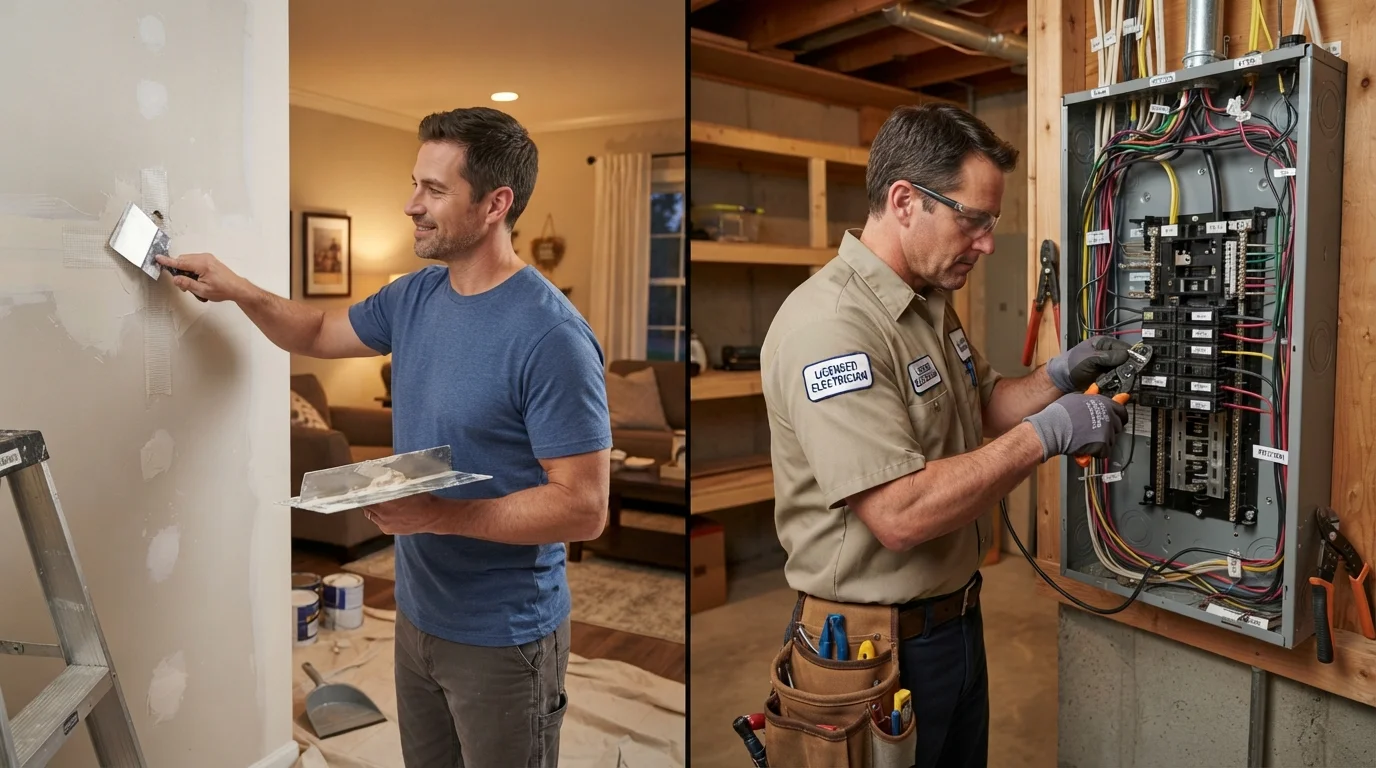
Many standard home maintenance tasks are genuinely manageable without professional training. Replacing a bathroom faucet, patching small holes in drywall, re-caulking a tub surround, painting interior rooms, swapping outlet covers, or installing a programmable thermostat (on a low-voltage system) are all examples of repairs where a motivated homeowner with the right tools and a reliable tutorial can get solid results.
Choosing the right materials matters enormously on these projects. For instance, many homeowners confuse grout, caulk, and sealant - using the wrong one in the wrong location leads to early failure and water damage. Understanding which material belongs where is the kind of foundational knowledge that separates a successful DIY repair from one that needs redoing in six months.
DIY falls short when the repair touches systems that are regulated for public safety: electrical wiring beyond device-level swaps, gas appliances and lines, load-bearing structural elements, roofing replacement, and main water supply or drain lines. These aren't just technically difficult - they're areas where an error can injure or kill, and where unpermitted work can cloud your property's title.
~1 in 3
DIY repairs that require professional correction
Industry estimates suggest a significant portion of DIY home repair attempts result in additional professional remediation, though figures vary by task type.
1%-4%
Of home value recommended annually for maintenance
A commonly cited rule of thumb suggests homeowners budget between 1% and 4% of their home's value each year for upkeep and repairs, whether DIY or professional.
Varies widely
Permit costs by jurisdiction and project scope
Permit fees in the US can range from under $100 for minor work to several hundred dollars for major system replacements; local building departments set these rates.
The Real Cost Comparison: Savings vs. Risk
DIY repairs do offer genuine savings on labor - often the largest portion of a professional's invoice. But that math only holds when the repair goes as planned. A botched electrical fix that sparks a house fire, or a plumbing repair that leads to hidden water damage inside a wall, can result in costs that dwarf the original professional quote.
Think of it this way: the appeal of DIY is the gap between what you pay (materials only) and what a pro charges (materials plus labor plus overhead). That gap is real. But it comes with the assumption that your repair holds. When it doesn't, you pay both the professional fix and the additional damage your attempt caused.
Proper seasonal home maintenance - things like cleaning gutters, checking caulk around windows, and servicing HVAC systems - is where DIY effort consistently pays off without meaningful risk. These are the tasks that prevent expensive professional calls in the first place.
When in Doubt, Get an Assessment First
If you're unsure whether a repair is DIY-appropriate, consider paying a licensed professional for a diagnostic visit before committing to either path. Many contractors offer inspection or assessment services, and understanding the full scope of a problem - before you touch it - can save significant money. This is especially valuable for anything involving moisture damage, older wiring, or foundation concerns.
Permits, Code, and the Hidden Legal Risk of DIY
One of the most overlooked dimensions of the DIY-vs.-professional decision is permit and code compliance. Many significant repairs - electrical panel upgrades, water heater replacements, structural modifications, window enlargements - legally require a permit and subsequent inspection in most US jurisdictions.
Homeowners sometimes skip permits to save money and avoid the hassle of inspections. This creates two serious problems. First, unpermitted work that doesn't meet code is a safety hazard to your household. Second, when you sell the home, a buyer's inspector or title search can surface unpermitted improvements, potentially requiring you to remediate them - at significant expense - before closing.
Licensed contractors are familiar with local code requirements and typically handle permit applications as part of the job. That administrative burden is part of what you're paying for, and it protects you as much as it protects the eventual buyer. If you're budget-conscious, focus your DIY energy on the many tasks that don't require permits at all, and reserve professional spending for the work that genuinely mandates it. Our broader coverage of home maintenance myths that cost homeowners money addresses several misconceptions in this space, including the mistaken belief that small unpermitted jobs are always consequence-free.
This article is for general informational purposes only and does not constitute legal, financial, or professional contracting advice. Requirements for permits, licensed trades, and safety standards vary by state and municipality. Always verify local regulations and consult a qualified, licensed professional before undertaking repairs that may affect the structural, electrical, plumbing, or gas systems of your home.