
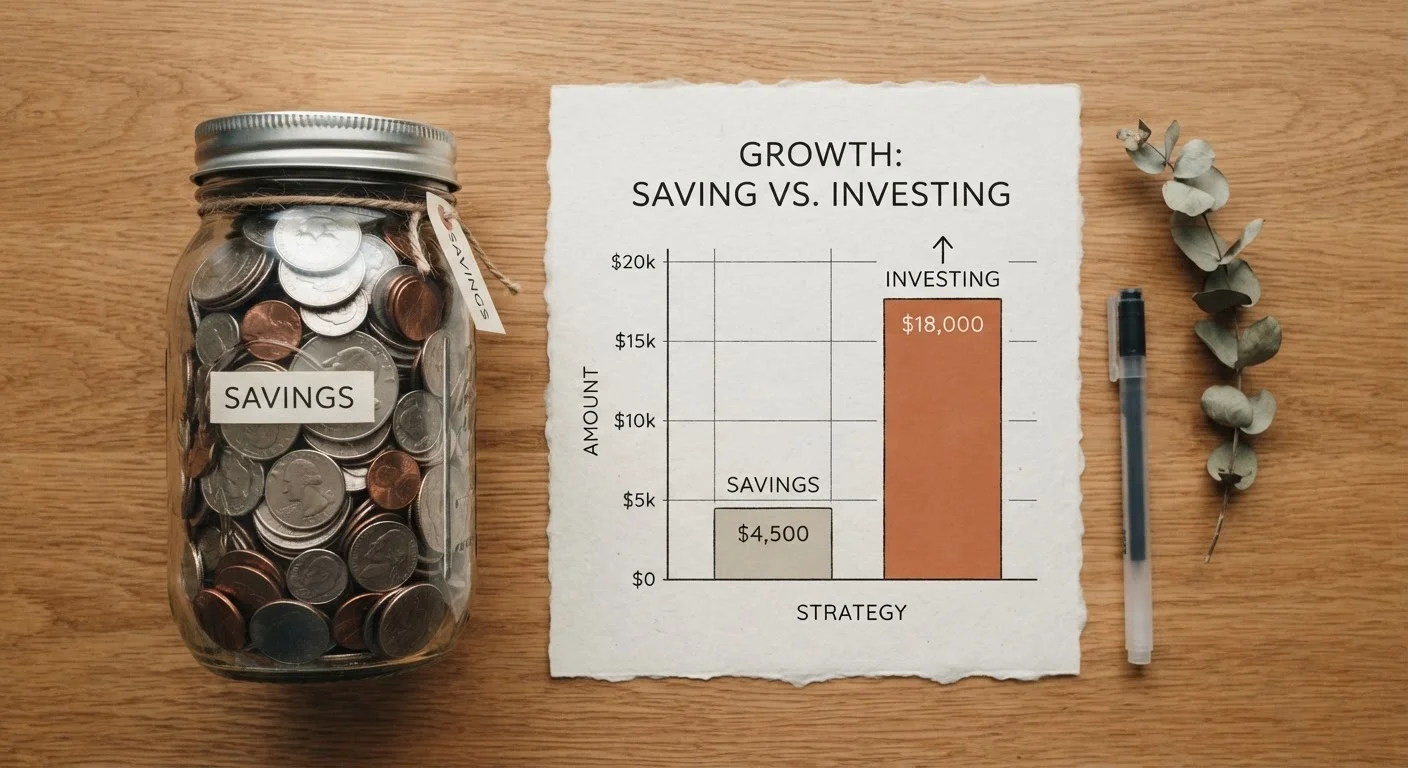
Two Tools, Two Distinct Jobs
Saving and investing are often lumped together as if they're interchangeable - they aren't. Each serves a specific purpose in a healthy financial plan, and using the wrong tool for the wrong job costs real money over time.
Saving means setting aside money in stable, low-risk accounts - think high-yield savings accounts, money market accounts, or certificates of deposit. The goal is capital preservation and accessibility. You won't lose the principal, and you can reach the money quickly. The trade-off is modest growth: savings account interest rates rarely keep pace with inflation over long periods.
Investing means putting money into assets - such as stocks, bonds, or index funds - that carry some level of risk in exchange for the potential to grow meaningfully over time. The key word is time. Markets fluctuate in the short run, which is why investing rewards patience and punishes urgency.
Understanding this distinction helps you stop asking "saving or investing?" and start asking "saving and investing - in what order and proportion?" For a broader view of everyday money habits, explore the Everyday Money Tips hub.
| Criterion | Saving | Investing |
|---|---|---|
| Primary goal | Preserve capital, stay accessible | Grow wealth over time |
| Risk level | Very low (FDIC-insured accounts) | Variable; loss of principal is possible |
| Typical time horizon | Short-term (under 3-5 years) | Long-term (5+ years) |
| Liquidity | High - funds usually accessible immediately | Lower - selling assets takes time and may trigger losses |
| Inflation protection | Weak over long periods | Stronger potential over long periods |
| Return potential | Modest, predictable | Higher potential, but not guaranteed |
| Best used for | Emergency fund, near-term goals | Retirement, long-term wealth building |
When Saving Should Come First
Before committing extra dollars to any investment account, two financial conditions generally deserve priority.
1. No Emergency Fund
An emergency fund - typically three to six months of essential living expenses held in an accessible account - acts as a buffer against financial shocks. Without it, a job loss, car repair, or medical bill often means going into debt. Debt, especially at high interest rates, can unravel financial progress faster than any investment gain can repair it. Building even a small emergency fund on a tight budget is possible with consistent small deposits.
2. High-Interest Debt
If you're carrying credit card balances or other debt at interest rates above roughly 6-7%, paying that down delivers a guaranteed, risk-free "return" equal to the interest rate. No investment consistently beats high-rate debt costs reliably enough to justify delaying repayment. See how to balance debt repayment with saving simultaneously for practical approaches that don't force a complete either-or choice.
~57%
Americans with less than 3 months of emergency savings
Federal Reserve surveys have consistently found that a majority of U.S. adults would struggle to cover several months of expenses from savings alone.
20%+
Typical credit card interest rate
Average credit card APRs in the United States have exceeded 20% in recent years, according to Federal Reserve consumer credit data.
50-100%
Effective return from capturing employer 401(k) match
A dollar-for-dollar or 50-cent-on-the-dollar employer match represents an immediate return before any market gains - widely cited by financial planners as the highest-priority first investment step.
When Investing Earns Priority
Once a basic emergency fund exists and high-interest debt is under control, shifting more dollars toward investing makes financial sense for most people - especially in two situations.
Employer Retirement Match
If your employer matches contributions to a 401(k) or similar plan, capturing the full match before doing anything else is widely considered one of the highest-value financial moves available. Passing it up is effectively leaving part of your compensation on the table.
Long Time Horizons
For goals five or more years away - retirement, a child's education, long-term wealth - investing gives money time to grow in ways a savings account cannot match. Historically, broad market indexes have delivered average annual returns that significantly outpace savings rates over multi-decade periods. That said, past performance does not guarantee future results, and all investing involves risk of loss.
Inflation is also a hidden cost of over-saving. Money sitting in a low-yield account for decades loses purchasing power gradually. Investing is one of the primary tools households use to preserve and grow real wealth over time. For a structured way to think about both sides together, the complete framework for balancing savings and debt walks through the full picture.
Saving and Investing Can - and Often Should - Happen Together
The framing of "saving vs. investing" can suggest a hard choice, but for many people the practical answer is "both, in the right proportions." Contributing to a retirement account while also maintaining a savings fund is a common and sensible approach. The sequencing matters more than the idea that you must fully complete one before starting the other. Small, consistent steps on both fronts often outperform waiting for perfect conditions to begin either.
Making the Decision With Your Next Dollar
Most people don't face a permanent either-or choice - they face a sequencing question. A simple order of operations helps clarify priorities:
- Capture any employer retirement match (immediate, guaranteed return).
- Build a starter emergency fund (even $1,000 provides meaningful protection).
- Pay down high-interest debt aggressively.
- Grow the emergency fund to three to six months of expenses.
- Increase investment contributions for long-term goals.
This isn't a rigid formula for every person - income, family situation, debt load, and goals all affect the right balance. The Budgeting Basics hub offers practical tools for tracking where your dollars are going so you can reallocate deliberately. And if beliefs about money are holding back progress, common money myths worth challenging may be worth reading.
This article is for general informational and educational purposes only. It does not constitute personalized financial, investment, or tax advice. Consider consulting a qualified financial professional before making decisions based on your specific situation.