
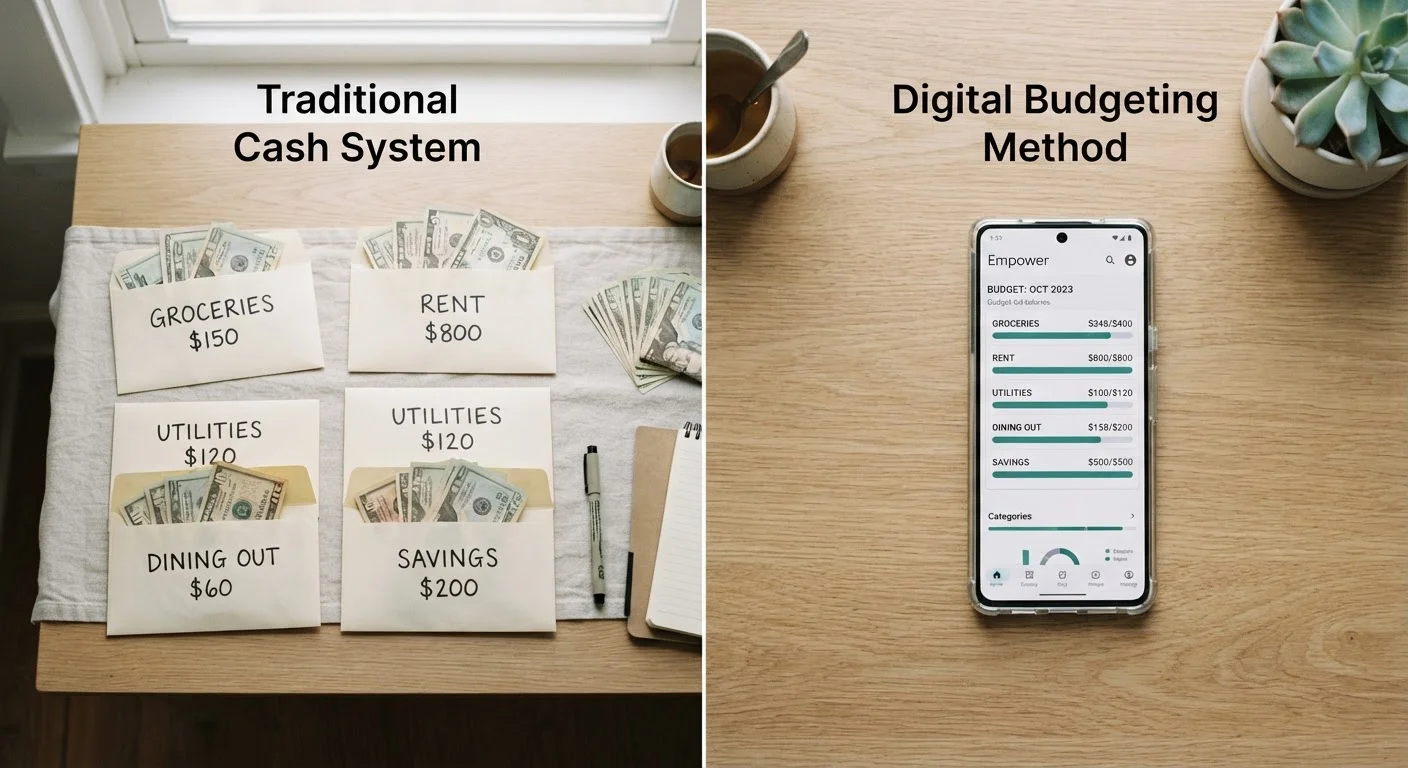
How Each Method Actually Works
The cash envelope method is straightforward: you withdraw physical cash at the start of a budget period and divide it into labeled envelopes - one for groceries, one for gas, one for dining out, and so on. When an envelope is empty, spending in that category stops. No borrowing from next month, no exceptions. The friction is the point.
Digital expense tracking works differently. You connect bank accounts and cards to an app or spreadsheet, and every transaction gets categorized - automatically or manually. The system shows you where your money went, alerts you when you approach a limit, and keeps a running ledger of your financial picture in real time.
If you're entirely new to either approach, the basics of building a first budget are worth reviewing before committing to either system. A solid foundation in spending categories also helps - see which categories every household budget should account for.
Strengths and Weaknesses, Side by Side
Each method has clear advantages - and genuine limitations that matter depending on how you live and spend.
| Cash Envelope Method | Digital Expense Tracking | |
|---|---|---|
| Setup effort | Low - cash, envelopes, and a plan | Moderate - account connections and categorization |
| Works for online purchases | No - cash only | Yes - all payment types |
| Behavioral friction | High - empty envelope stops spending | Low - easy to ignore alerts and overspend |
| Automation | None - fully manual | High - auto-syncs transactions |
| Security risk | Lost cash is unrecoverable | Data privacy and breach exposure |
| Visibility across accounts | Limited to cash categories | Full picture across all accounts |
| Best for new budgeters | Yes - simple and tactile | Depends on tech comfort level |
The cash method's biggest strength is behavioral: handling physical money activates a different psychological response than swiping a card. Research in consumer psychology consistently suggests people spend less when paying with cash compared to cards. The trade-off is practicality - cash doesn't work for subscriptions, online purchases, or automatic bill pay.
Digital tracking tools shine in convenience and coverage. They capture every transaction without manual effort and give you a whole-picture view of your finances. The limitation is that visibility doesn't automatically change behavior. Seeing that you overspent on takeout doesn't prevent it next month the way an empty envelope does. For a deeper look at what these apps can and can't do, see how everyday money-tracking tools really work.
Who Tends to Succeed With Each Approach
The cash envelope method tends to work well for people who:
- Have a history of overspending in specific discretionary categories
- Prefer concrete, tangible limits over abstract numbers on a screen
- Are starting out and want a system with minimal setup
- Find that digital budgets are easy to mentally rationalize around
Digital tracking tends to suit people who:
- Do most of their spending online or with cards
- Want to track multiple financial accounts in one place
- Are comfortable with technology and responsive to data-driven feedback
- Need to share financial visibility with a partner or household
Try a Hybrid Approach First
You don't have to choose one method exclusively. Consider using cash envelopes for two or three categories where you consistently overspend, while using a digital tool to monitor everything else. This reduces the burden of all-cash management while preserving the behavioral guardrails where you need them most. After 60-90 days, you'll have real data to decide if one approach is working better than the other.
Many households find success splitting the difference: using physical cash for high-temptation variable categories (restaurants, entertainment, personal spending) while tracking fixed and digital expenses through an app. This hybrid approach is explored further in envelope budgeting adapted for the digital age.
Making Your Choice - and Sticking With It
The single biggest predictor of budgeting success is consistency, not method. A cash system abandoned after two weeks delivers no benefit. A tracking app ignored after setup does the same.
Before choosing, ask yourself: Do I need to be stopped from spending, or do I need better information about my spending? The former points toward cash envelopes. The latter points toward digital tracking.
If you're unsure, start with whichever feels less burdensome to maintain. Sustainable habits beat sophisticated systems. You can also make tracking less stressful than it sounds - the approach of tracking without obsessing over every receipt applies equally to both methods.
For more on building long-term financial habits across saving and debt, the Saving & Debt hub offers practical frameworks that complement either budgeting approach.
This article is for general informational purposes only and does not constitute personalized financial advice. Consider consulting a qualified financial professional for guidance specific to your situation.