
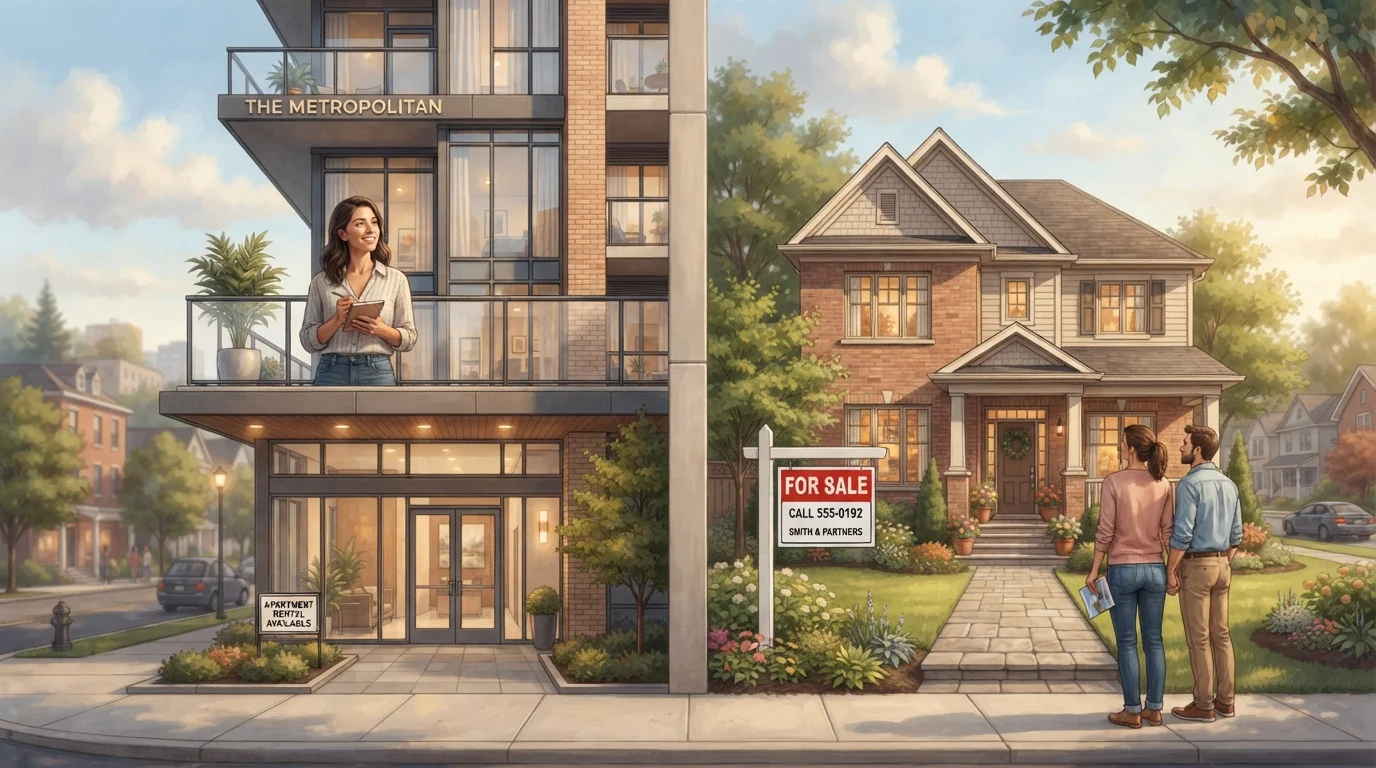
The Financial Baseline: What Each Option Actually Costs
The most common mistake in the rent-vs-buy debate is comparing a monthly mortgage payment to a monthly rent payment and calling it even. The real comparison is far more layered. When buying, upfront costs typically include a down payment (commonly 3-20% of the purchase price), closing costs (generally 2-5% of the loan amount), and pre-paid expenses like homeowner's insurance and property taxes. Ongoing costs include mortgage interest, property taxes, homeowner's association (HOA) fees where applicable, and maintenance - which industry guidelines often estimate at 1-2% of a home's value annually.
Renting, by contrast, usually requires only a security deposit and first month's rent to move in. Monthly costs are more predictable, though subject to increases at lease renewal. For a comprehensive breakdown of what ownership costs beyond the mortgage, see the full cost of homeownership.
65.6%
U.S. homeownership rate
According to the U.S. Census Bureau, roughly two-thirds of American households own their home, though this rate varies considerably by age, income, and geography.
2-5%
Typical closing cost range when buying
The Consumer Financial Protection Bureau estimates buyers generally pay 2-5% of the loan amount in closing costs, separate from the down payment.
1-2%
Annual home maintenance cost estimate
A widely cited rule of thumb suggests homeowners budget 1-2% of a home's purchase price each year for routine maintenance and unexpected repairs.
Pros of Buying a Home
Ownership offers real financial and lifestyle benefits for the right buyer at the right time.
Builds equity with each mortgage payment
Unlike rent, mortgage payments reduce your loan balance over time, gradually increasing your ownership stake. That equity can be accessed through refinancing or realized when you sell.
Protection from rent increases
A fixed-rate mortgage locks your principal and interest payment for the life of the loan, providing long-term cost predictability that renters in rising markets can't count on.
Freedom to customize and renovate
Homeowners can paint, remodel, landscape, and modify their property without landlord approval, allowing the home to reflect personal needs and preferences.
Potential for long-term appreciation
Historically, U.S. home values have trended upward over multi-decade periods, though this varies significantly by market and is not guaranteed.
Stability for families and long-term planning
Ownership typically means staying in a school district, building neighborhood ties, and avoiding the disruption of periodic landlord-driven moves.
It's worth noting that home values can and do decline in certain markets or economic cycles. Ownership as a wealth-building strategy carries real risk alongside the potential upside. For a balanced view, see owning a home as a financial asset.
Cons of Buying a Home
Ownership also introduces costs and constraints that are easy to underestimate before signing on the dotted line.
Large upfront capital requirement
Down payments, closing costs, and prepaid expenses can easily total tens of thousands of dollars, placing ownership out of reach for buyers who haven't had time to accumulate savings.
Full responsibility for repairs and maintenance
When a water heater fails or a roof needs replacing, the cost falls entirely on the homeowner. These expenses are unpredictable and can be substantial in any given year.
Reduced geographic flexibility
Selling a home takes time, money, and market cooperation. Owners who need to relocate quickly for work or personal reasons may face financial losses or be forced into difficult decisions.
Exposure to market risk
Home values can decline, and owners who need to sell during a downturn may receive less than they paid, particularly if they bought recently or in a high-price market.
Opportunity cost of down payment capital
Money committed to a down payment is illiquid. Depending on market conditions and investment alternatives, that capital might generate comparable or greater returns elsewhere.
Understanding mortgage structure matters here too. The type of loan you choose affects long-term costs significantly. Fixed-rate vs. adjustable-rate mortgages work very differently, and the wrong choice for your situation can add thousands in interest over the life of the loan.
The Flexibility Factor: Why Renting Has Real Value
Renting is often framed as a temporary or inferior housing arrangement, but for many Americans, it's a deliberate and financially sound choice. Renters can relocate for career opportunities or personal reasons without the burden of selling a property. They're also insulated from sudden repair costs - a failed HVAC system or a leaking roof is the landlord's financial problem, not theirs.
Lease flexibility matters too. A month-to-month lease versus a fixed-term lease offers very different degrees of mobility, and understanding those trade-offs helps renters align their housing arrangement with their actual plans. For anyone entering the rental market for the first time, renting for the first time covers the full process from apartment search to lease signing.
Know Your Rights as a Renter
Renters have legal protections that vary by state and municipality, covering areas like security deposit limits, required notice before entry, habitability standards, and eviction procedures. Understanding your rights as a tenant is as important as understanding your financial obligations. The full picture of renting in the U.S. covers these protections in detail. Always review your lease carefully and consult a local tenant's rights organization or attorney if disputes arise.
The Break-Even Timeline and When Buying Makes Sense
One of the most practical tools in this decision is the break-even horizon: the point at which buying becomes more financially advantageous than renting, accounting for all costs on both sides. In many U.S. markets, that threshold falls somewhere between four and seven years - though it varies significantly by location, purchase price, down payment size, and local rent levels.
If you expect to move within two or three years, the transaction costs of buying and selling will typically outweigh any equity built. If you're planning to stay for a decade or more, ownership often becomes the stronger financial position. Aligning your housing choice with your honest life plans - not an idealized version of them - is the most useful frame for this decision. The Buying & Owning hub offers deeper guidance for those seriously evaluating purchase readiness, and budgeting basics can help ground the numbers in your actual monthly picture.
This article is for general informational and educational purposes only and does not constitute financial, legal, or investment advice. Consult a qualified financial adviser or housing counselor for guidance tailored to your personal circumstances.