
Know Exactly What You Owe
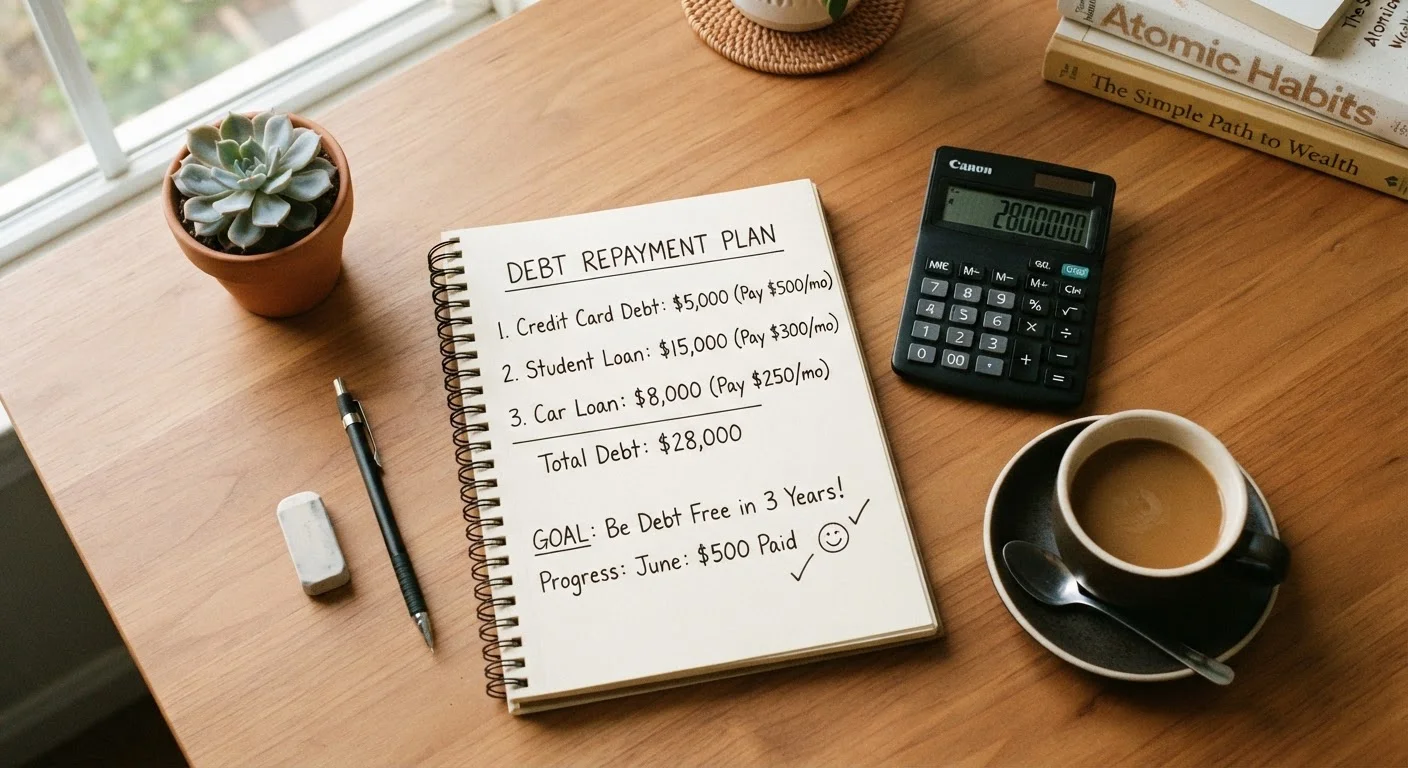
Most people carry a rough sense of their debt - a credit card here, a student loan there - without ever seeing the full picture in one place. That vague awareness makes it nearly impossible to make a real plan. The first concrete step is assembling a complete debt inventory.
For each debt you carry, write down:
- The creditor and account type (credit card, auto loan, medical bill, etc.)
- Current balance
- Interest rate (APR)
- Minimum monthly payment
Your monthly statements or online account portals are the most reliable source for this information. If you are unsure what you owe, a free annual credit report - available through the federally mandated system at AnnualCreditReport.com - can surface accounts you may have overlooked.
Once your list is complete, total everything up. Seeing the real number can feel uncomfortable, but it is the only honest starting point. For a structured way to work through this step, a personal debt checkup can help you map balances and interest load clearly.
APR (Annual Percentage Rate)
The yearly cost of borrowing money expressed as a percentage. A higher APR means you pay more in interest charges over time, making high-APR debts the most expensive to carry.
Minimum payment
The smallest amount a lender requires you to pay each month to keep the account in good standing. Paying only the minimum keeps you current but extends repayment and significantly increases total interest paid.
Debt avalanche
A repayment strategy that targets the highest-interest debt first. It is mathematically efficient, reducing the total interest you pay over the life of your debts.
Debt snowball
A repayment strategy that targets the smallest balance first. Clearing small debts quickly builds psychological momentum and can help people stay motivated.
Emergency fund
A reserve of cash set aside for unexpected expenses. Having even a small emergency fund can prevent you from adding new debt when something unplanned comes up.
Credit report
A detailed record of your borrowing history, including open accounts, balances, and payment history. In the U.S., consumers can access their reports for free through AnnualCreditReport.com.
Choose a Repayment Strategy
Once you know what you owe, you need a method for attacking it. Two approaches are widely used and well-supported by personal finance research:
The Avalanche Method
Direct any extra money beyond minimum payments toward the debt with the highest interest rate. When that balance reaches zero, roll its payment into the next highest-rate debt. This approach minimizes total interest paid - which means more of your money goes toward the actual balance, not the lender's profit.
The Snowball Method
Focus extra payments on the smallest balance first, regardless of rate. Clearing a small account quickly creates a tangible win that can build momentum. Some people find this psychological boost helps them stay committed through what is often a long process.
Neither method is universally superior - the right choice depends on what keeps you motivated and engaged. The strategy you actually stick with will outperform the one you abandon after two months.
Not Sure Which Method to Pick?
Start with the avalanche if you are motivated by numbers and want to minimize interest costs. Start with the snowball if you need early wins to stay engaged. You can also switch methods later - the most important thing is to begin. Tracking your progress in a simple spreadsheet or even on paper makes both approaches more tangible.
Build It Into Your Budget
Debt repayment only works reliably when it appears as a fixed line item in your monthly budget - not as whatever happens to be left over at month's end. If you have not built a working budget yet, a ground-up monthly budget walkthrough covers the basics in plain terms.
The goal is simple: assign your income to categories before you spend it, and treat debt payments the same way you treat rent or utilities - non-negotiable. Automating minimum payments where possible protects your credit and removes one more thing to remember. Any additional repayment amount you identify should also be scheduled, not left to willpower.
If your budget does not currently have room for extra payments, look first at variable spending - dining, subscriptions, entertainment - where temporary cuts can free up meaningful dollars without requiring a permanent lifestyle change.
Balancing Debt Repayment and Saving
One of the most common questions beginners ask is whether to pay off debt or save money first. The honest answer is: usually both, in the right proportion.
Financial educators frequently recommend building a small emergency fund - often cited as a few hundred to a thousand dollars - before making aggressive extra debt payments. The reasoning is practical: without any savings buffer, an unexpected car repair or medical bill often lands on a credit card, creating new debt that undoes recent progress.
Once that cushion exists, high-interest debt (generally credit cards) typically warrants priority because the interest rate it carries will likely exceed what a savings account or conservative investment earns. Lower-rate debt, like some student loans or auto loans, may warrant a more balanced approach.
For a deeper look at splitting limited income between both goals, paying off debt while saving at the same time walks through the practical tradeoffs. This is also an area where a licensed financial adviser can provide guidance tailored to your actual situation.
Interest Rates and Savings Rates Both Change
The math of whether to prioritize debt or savings depends partly on current interest rates and savings yields, both of which shift over time. The general principle - pay down high-interest debt aggressively while maintaining a safety net - holds across most rate environments, but the specific numbers worth comparing are the APR on your debt versus the yield on your savings account at any given time.
Habits That Help You Stay on Track
Getting out of debt is rarely quick, which means the habits you build matter more than any single decision. A few practices that tend to hold up over time:
- Review your balances monthly. Watching numbers fall - even slowly - is one of the most effective forms of motivation available.
- Automate what you can. Scheduled minimum payments eliminate the risk of late fees and credit score damage from missed due dates.
- Redirect windfalls. Tax refunds, work bonuses, or even small cash gifts can make a disproportionate dent in a balance when applied directly to debt.
- Avoid taking on new debt while repaying old debt. This is not always possible, but where it is, it dramatically shortens your timeline.
Building sound financial habits goes hand in hand with building a workable budget. The Everyday Money Tips hub has practical ideas for making smarter day-to-day money decisions that support your larger goals.
This article is for general informational and educational purposes only and does not constitute personalized financial, legal, or investment advice. Consult a qualified financial professional before making decisions based on your individual circumstances.