
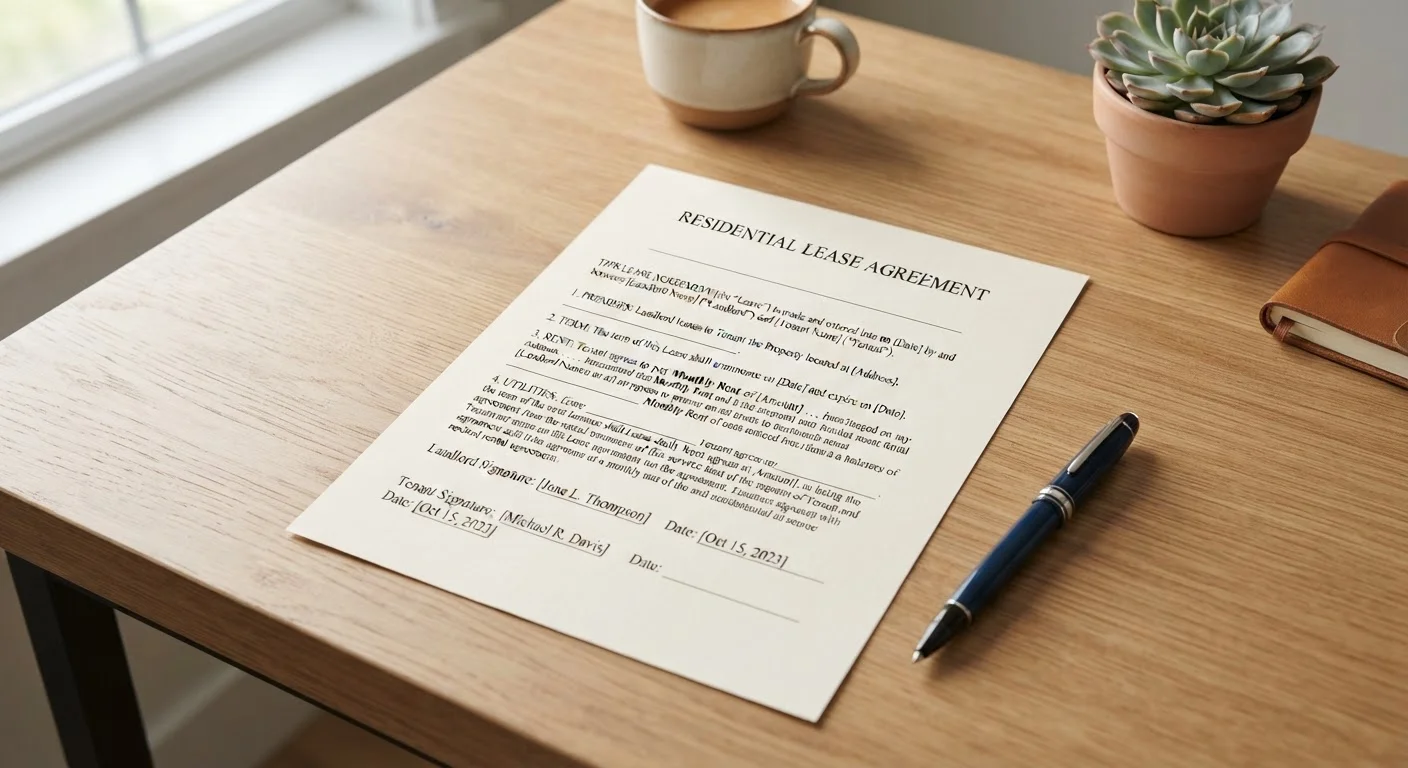
The Clauses That Actually Shape Your Tenancy
Most renters focus on the monthly rent figure and sign everything else without a second look. That's understandable - lease agreements are long, dense, and written in legal language designed for courts, not tenants. But buried inside those pages are provisions that directly control how much you pay, what you can and can't do in the unit, and what you owe if circumstances change.
If you're navigating the rental process for the first time, our ground-up renting guide covers the full arc from apartment hunting to move-in. Here, we focus specifically on decoding the contract itself.
The most consequential lease sections to scrutinize are:
- Rent payment terms - the due date, accepted payment methods, grace periods, and late fee amounts
- Security deposit terms - the amount, conditions for deductions, and the return timeline
- Maintenance and repair responsibilities - what the landlord must fix and what falls on you
- Occupancy and use restrictions - who can live there, subletting rules, and pet policies
- Renewal and termination provisions - what happens at the end of the lease term
State Law Can Override Your Lease
A lease clause is only enforceable if it doesn't violate state or local landlord-tenant law. For example, a lease that waives your right to a habitable unit, charges a security deposit above the state-mandated cap, or imposes excessive late fees may be partially or fully unenforceable. When in doubt, check your state's tenant rights resources or consult a local attorney.
Rent, Fees, and the Fine Print Around Payment
Beyond the base rent, leases often include clauses that can add up quickly if you're not paying attention. Late fees are common - many leases charge a flat fee or a percentage of monthly rent if payment isn't received by the due date. Some states cap late fees and require a minimum grace period before they can be assessed, so your state's law may offer protections not visible in the lease itself.
Pay attention to returned check fees, rules about cash versus electronic payment, and whether rent must be paid on a specific day or within a window. Some leases also include rent escalation clauses, which allow for automatic increases at renewal - knowing this in advance prevents unpleasant surprises at the end of your term.
Understanding the difference between a fixed-term lease and a month-to-month arrangement also affects your cost predictability. Comparing lease types can help you decide which structure better fits your situation.
Security Deposits, Move-Out, and Getting Your Money Back
The security deposit section is one of the most disputed areas in landlord-tenant relationships. Your lease should clearly state the deposit amount, the account or conditions under which it's held, and what constitutes a valid deduction. Landlords can typically deduct for unpaid rent and damage beyond normal wear and tear - a legal standard that varies somewhat by state but generally excludes minor scuffs, faded paint, or carpet wear from ordinary use.
Most states impose a legal deadline - commonly 14 to 30 days after move-out - by which landlords must return the deposit or provide an itemized written list of deductions. Failing to meet this deadline can forfeit the landlord's right to any deductions in some jurisdictions.
Before moving in, document the unit's existing condition thoroughly. A pre-move-in checklist helps you create a record that protects you at move-out. Photographs dated on your phone are simple, effective evidence.
Document Everything at Move-In
Before unpacking a single box, walk through every room and photograph existing damage - scuffs, stains, broken fixtures, anything that isn't pristine. Email the photos to yourself or your landlord immediately to create a timestamped record. This documentation is your strongest protection against unfair security deposit deductions when you eventually move out.
Renewal, Termination, and What the Lease Doesn't Say
Every lease has an end date - and what happens around that date matters more than many renters realize. Some leases automatically convert to month-to-month tenancy if neither party acts; others require written notice of non-renewal within a set window (often 30 to 60 days). Missing that notice deadline can obligate you to another full term or subject you to penalties.
Early termination clauses define what it costs to exit before the lease ends. These fees are legitimate and enforceable, but some states require landlords to mitigate damages by actively trying to re-rent the unit - limiting the total amount you'd owe. If your lease lacks a termination clause, state law typically fills the gap.
Finally, some provisions renters overlook entirely: subletting restrictions (which can prohibit short-term rental platforms), guest policies (limiting how long a non-tenant can stay), and alterations clauses (defining what modifications require written permission). Check whether your lease also requires renter's insurance - if so, it's a contractual obligation, not just a recommendation. Understanding what renter's insurance covers can help you choose appropriate coverage.
This article provides general educational information about lease agreements and is not legal advice. Lease law varies significantly by state and locality. Consult a qualified attorney or tenant rights organization for guidance specific to your situation.
~50%
Renters who report not fully reading their lease
Consumer advocacy surveys consistently find roughly half of tenants sign leases without reading every clause, increasing exposure to avoidable disputes.
14-30 days
Typical state deadline to return security deposit
Most U.S. states set a statutory deadline for landlords to return deposits or provide itemized deductions after a tenant vacates.
44 million+
Renter households in the United States
According to U.S. Census Bureau data, more than 44 million American households rent their primary residence, making lease literacy a broadly consequential issue.